HANGZHOU, ZHEJIANG, CHINA, October 9, 2026 /EINPresswire.com/ — Choosing between an enclosed steel cap and an open-access guard requires balancing complete transit isolation against fast manifold connectivity. When sourcing a Steel Cylinder Valve Protective Cap from China, fleet managers must consider long-haul shipping stresses, automated filling schedules, and regional hazardous materials compliance. Qizheng manufactures robust steel caps and open-access guards engineered to withstand severe intermodal freight transit and routine depot handling.
Managing a large-scale compressed gas cylinder fleet requires balancing structural risk mitigation against operating productivity. A damaged cylinder valve can release stored energy instantly, posing severe risks to personnel and facilities. When evaluating protective hardware, sourcing directors frequently debate whether to standardize on full-enclosure threaded steel caps or to transition towards permanent, open-access valve guards. Sourcing both product families from specialized manufacturers in China allows procurement managers to deploy hybrid fleet strategies that optimize cost, safety, and operational speed.
Analyze Fundamental Differences in Valve Enclosure and Accessibility
Steel cylinder valve protective caps provide total physical enclosure for sensitive valve assemblies. A deep-drawn steel cap threads securely onto the cylinder neck ring, completely covering the valve body, handwheel, packed gland, and pressure relief device. This solid metal envelope isolates components from accidental drop impacts, falling objects, and environmental contaminants during inter-facility transit. For high-pressure specialty gases, toxic compounds, and electronic-grade mixtures, complete enclosure ensures the valve remains isolated from external physical shock and tampering.
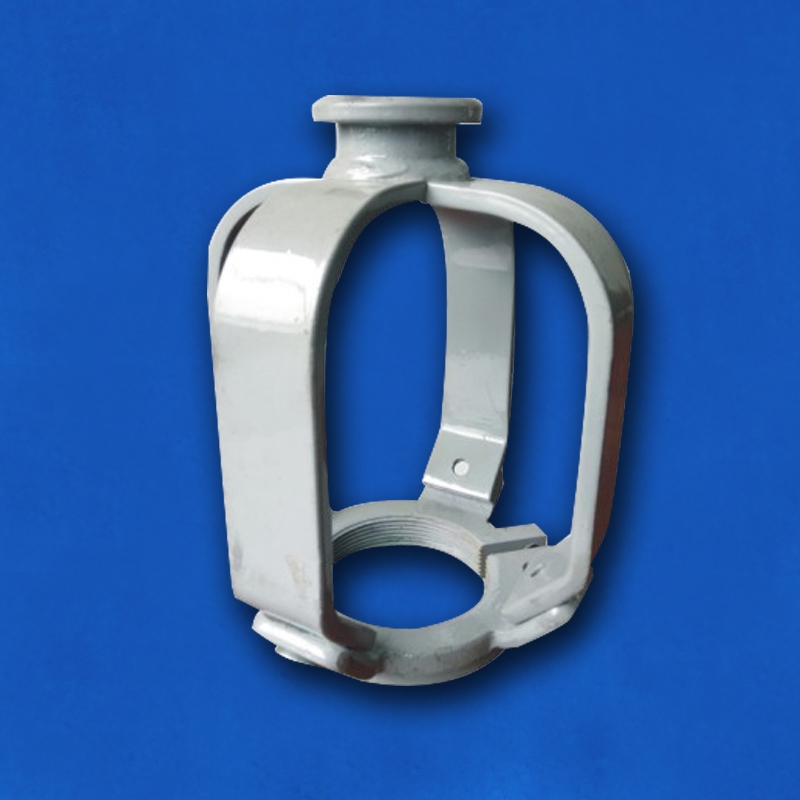
Open-access guards offer continuous operational accessibility while maintaining robust impact protection overhead. Featuring reinforced side apertures or cage geometries, guards allow operators to connect regulators, filling whips, and hoses without unscrewing the protective hardware. In high-turnover gas filling depots and automated carousels, eliminating manual cap removal saves substantial labor time per shift while reducing ergonomic strain injuries.
This open-access configuration eliminates repetitive cap handling across filling depots and high-volume cutting stations. Sourcing teams deploy open guard geometries to maximize workflow throughput while maintaining essential overhead valve protection. By acting as a structural roll cage anchored to the cylinder neck ring, open-access guards redirect lateral and vertical impact shocks away from the valve stem into the cylinder shoulder.
Evaluate Logistics Safety: Long-Distance Freight vs Yard Mobility
Logistical handling requirements determine which protection geometry best safeguards cylinder fleets. Long-distance freight over highways, rail networks, or ocean containers favors fully enclosed steel caps. Hazardous materials transport regulations mandate closed caps for toxic or flammable gases, including United States DOT 49 CFR and European ADR rules. This ensures valves remain shielded during freight shifting, emergency braking, and intermodal container handling.
Within local industrial facilities, construction jobsites, and metal fabrication shops, open-access guards provide significant operational advantages. Technicians move cylinders between workstations frequently, requiring quick gas connections and frequent regulator repositioning. Open guards protect valve stems from glancing blows from cranes and forklifts while eliminating the risk of lost caps that leaves returned empty cylinders unprotected.
When traditional caps are removed on jobsites, contractors frequently misplace them or leave them behind upon cylinder return. Empty cylinders returning through distribution networks without caps expose neck ring threads and valve outlets to rain, sand, and impact damage. Deploying permanent open-access guards eliminates this chronic inventory shrinkage, reducing recurring replacement cap procurement expenses across the fleet.
Steel Caps vs Open-Access Guards Technical Trade-Offs
Evaluating structural, operational, and regulatory parameters helps fleet managers assign the correct hardware across five core trade-off dimensions:
Enclosure Geometry: Steel caps feature a 360-degree seamless solid steel dome for harsh transit and extreme weathering, while open-access guards provide lateral windows with an overhead crown designed for continuous manifold hookups.
Valve Access Speed: Steel caps require manual unscrewing before cylinder connection, while open guards permit permanent regulator, whip, and pigtail attachment to accelerate filling cycles.
Environmental Defense: Enclosed caps provide a total physical barrier against dirt, grit, moisture, and chemical fumes, while open guards protect primarily against direct overhead precipitation and vertical falling objects.
Handling Ergonomics: Standard caps maintain smooth exterior contours unrated for lifting, whereas certified guards incorporate integrated handles that assist manual cylinder rolling and crane hoisting.
Impact Behavior: Stamped steel caps deform plastically to absorb drop kinetic energy, while rigid cast guards deflect impact shock around the valve envelope into the vessel shoulder.
Understand Neck Ring Collar Fitment and Thread Standards
Both protective caps and open-access guards rely on standardized neck ring threads for secure mechanical mounting. Caps and guards must thread smoothly onto cylinder collars without binding, axial wobble, or thread galling. Experienced China manufacturers maintain tooling for standard Whitworth and metric thread profiles to support international fleet compatibility across diverse container vintages.
Threaded neck rings follow regional standards such as Whitworth 55-degree profiles—notably W80-11 and W3-1/8-11—alongside high-capacity metric collar specifications. Sourcing teams ensure that thread engagement depth provides adequate clamping force against continuous highway transit vibration.
Collar Fitment and Interface Verification Protocol
Sourcing engineers should audit supplier interface controls through a systematic four-step procedure:
Validate collar thread pitch diameter, thread lead-in chamfers, and root radiuses using calibrated Go and No-Go plug gauges.
Confirm adequate internal radial and axial safety clearances (minimum 15 mm) over fully assembled valves using CAD collision models.
Inspect dual opposing pressure relief vent ports on enclosed caps to guarantee safe fugitive gas dispersion under slow valve leaks.
Verify uniform surface coating thickness along internal threads to ensure smooth hand installation without binding or coating flaking.
Procurement Strategy: Sourcing Both Protection Styles from China
Partnering with an established manufacturer in China provides access to comprehensive metal forming and casting capabilities. Sourcing managers benefit from working with suppliers operating integrated stamping, forging, and casting facilities under unified quality oversight. This infrastructure allows procurement teams to source deep-drawn steel caps and heavy cast guards under a single purchase agreement, consolidating supplier audits and freight logistics.
Consolidating orders with a single manufacturer simplifies supply chain management and ensures consistent quality standards across entire fleet retrofitting programs. Qualified factories provide ISO 9001:2015 quality traceability, drop impact testing to ISO 11117, and flexible OEM customization from customer blueprints. Working directly with manufacturing facilities in major industrial hubs like Zhejiang ensures efficient shipping access through Ningbo and Shanghai ports, minimizing ocean transit lead times.
Frequently Asked Questions Regarding Caps and Guards
Fleet managers frequently evaluate safety trade-offs, collar threads, and minimum order volumes when sourcing caps and guards. The following direct answers address essential technical questions for industrial gas distributors.
Can cylinders be lifted by their protective caps during handling?
No, standard cylinder caps must never serve as lifting points; only specialized guards specifically engineered, tested, and certified for lifting under ISO 11117 may support cylinder weight.
When are full-cover steel caps mandatory for gas cylinders?
Full-cover caps are generally mandatory during commercial roadway and maritime freight transport for high-pressure hazardous gases lacking certified permanent guards.
Are collar threads interchangeable between steel caps and open guards?
Yes, both caps and guards utilize standardized neck ring thread specifications such as W80-11 and W3-1/8-11 for broad cylinder compatibility across standard neck collars.
What surface treatments protect steel caps and guards from corrosion?
Industrial multi-coat systems combining cathodic electrodeposition with baked polyester powder coatings deliver exceptional weather resistance. This dual-layer finish withstands over 500 hours of continuous ASTM B117 salt fog testing without blistering or thread seizure.
What is the standard minimum order quantity when sourcing from China?
Volume custom runs typically establish a 500-unit minimum order quantity. This threshold accommodates the changeover of heavy stamping dies, coil slitting adjustments, and dedicated powder coating color lines.
Sourcing a Steel Cylinder Valve Protective Cap from China
Selecting between steel protective caps and open-access guards requires balancing regulatory transit mandates against daily operational efficiency. Partnering with a proven China manufacturer ensures your cylinder fleet receives precision-engineered protection built to international standards.
As a leading supplier of compressed gas valve protection products, Qizheng provides heavy-gauge protective caps and open-access guards built to international standards. Operating through its Hexing Machinery production plant in Zhejiang, the company combines high-tonnage hydraulic forming with automated surface finishing lines. Designed to satisfy DOT 49 CFR requirements and ISO 11117 drop protocols, Qizheng hardware protects cylinder assets across long-distance freight routes and demanding industrial environments. Visit https://www.gascylindercap.com/ or contact our technical team to discuss your fleet requirements and request evaluation samples.
Hangzhou Qizheng Trading Co., Ltd.
Qizheng
Visit us on social media:
LinkedIn
Instagram
Facebook
YouTube
X
Legal Disclaimer:
EIN Presswire provides this news content “as is” without warranty of any kind. We do not accept any responsibility or liability
for the accuracy, content, images, videos, licenses, completeness, legality, or reliability of the information contained in this
article. If you have any complaints or copyright issues related to this article, kindly contact the author above.

Media gallery