
NEW YORK, NY – September 8, 2026 – (KOREWIRE)
A week after the funeral, the daughter calls her father’s lawyer. Everyone in the family is certain there was a will. They remember the appointment. They remember him coming home and saying it was taken care of. But no one can find it. It isn’t in the filing cabinet. There is no record of a safe-deposit box, and the attorney who drafted it retired six years ago.
The obvious solution was to store the will online. Nearly every other document in American life has already made that transition. But estate planning has been left behind. For roughly four centuries, a will meant wet ink and an original paper document. A copy was generally unacceptable from the court’s perspective.
Finally, the law is catching up. The legal profession hasn’t.
The law has changed
Beginning in 2020, a number of states adopted the Uniform Electronic Wills Act or similar laws, which allow wills to be created, signed, witnessed, notarized and stored electronically. The early concern was predictable: Would digital wills invite fraud? So far, the states that adopted them have not reversed course.
The reform has continued. Several states have expanded electronic execution beyond wills to trusts, powers of attorney and health care directives through laws based on the Uniform Electronic Estate Planning Documents Act. On April 14, 2026, Gov. Tim Walz of Minnesota signed his state’s version into law after it passed the Senate 59 to 7 and the House 134 to 0. The message from state legislatures is increasingly clear: Estate planning can be done electronically.
Yet walk into many estate-planning practices in those same states, and you’ll still find the same ritual: a conference room, a stack of paper and a pen. Many attorneys are not even aware that the laws have changed. To them, the traditional signing ceremony remains the only option.
Nothing lines up
The problem is not simply that estate lawyers are slow to adopt technology. It’s that most of the technology available to them was never designed for what estate law now requires. States that have legalized electronic wills have established their own rules governing how estate-planning documents must be signed, witnessed, notarized, stored and, in some cases, filed with the courts. Those requirements can differ not only from state to state, but from one document to another.
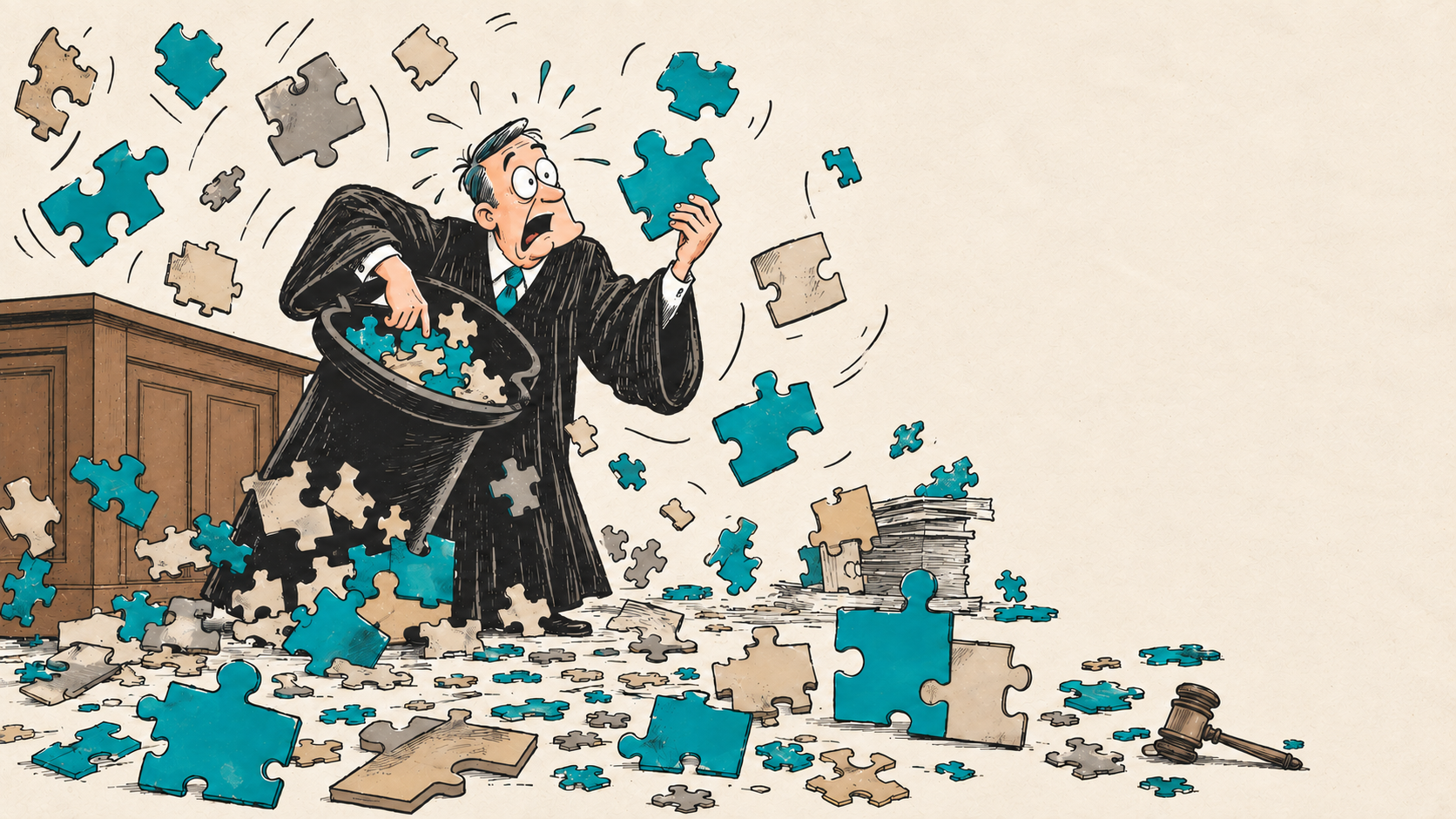
Electronic execution is essentially a box of puzzle pieces. One piece allows a witness to participate by video; another may require physical presence. One state may accept one form of electronic signature while another imposes different requirements. Another piece represents notarization; another a self-proving affidavit. Every legislature has reached into the same box and pulled out a different handful of requirements, often doing so again for every other type of estate-planning document. For lawyers, the result is an administrative nightmare. Until now, it has often been easier to ignore the change and continue with business as usual.
Then comes the question of what happens to the document once it is signed. Consider Florida and New York. When New York’s electronic-wills law takes effect in December 2027, electronic wills will have to be filed with the state’s Unified Court System within 30 days of execution or they will be deemed invalid. In Florida, making an electronic will self-proved requires it to designate a qualified custodian and remain in the custody of a qualified custodian before being offered for probate. That custodian must satisfy specific requirements for securely maintaining the record, protecting its confidentiality and ultimately depositing it with the court after the testator’s death.
Another complication is the attorney’s workflow. Estate-planning signings are not a simple 20-minute exercise. Ceremonies involve a varying number of participants and different preferences for the order in which documents are signed. The technology has to give the attorney control over how the signing is run, including the ability to bring clients into the office and have them sign electronically on an iPad.
This is not something an electronic-signature platform can simply bolt on. It requires an entire system. Most e-signature platforms were built around a fixed process: send a document, collect signatures and store the completed file. They were not built to adapt to the legal requirements of each state and the preferences of every attorney.
What attorneys are actually facing
We spoke with 14 estate-planning attorneys in South Florida. Only half knew that the relevant electronic-execution legislation had passed. Only one had actually attempted an electronic execution.
That lawyer had pieced together three different products: one for the signature, another for the video conference and another for storage, all running in parallel browser tabs. She could manage it. Her clients could not. Worse, the process was unforgiving. Under the rules governing electronic presence, closing a browser tab during the ceremony could do more than interrupt the meeting. It could invalidate the execution itself.
After a few attempts, she largely stopped trying.
So where is the software?
The obvious question is why the legal technology industry hasn’t filled the gap. The answer is that almost everything about this problem runs against the way existing legal technology is built and sold. The major platforms are horizontal by design. They solve roughly 80 percent of a problem across many practice areas. Estate planning requires the opposite: a purpose-built solution for estate-planning attorneys, with jurisdiction-specific rules and workflows that have little application elsewhere.
Moreover, these attorneys have spent decades building highly specific processes around paper. They don’t want to rebuild their practices just to adopt new technology. As Aaron Burlacoff, Willow’s founder, puts it: “It’s wrong to ask attorneys to change the way they run their practices just to adopt our technology, regardless of how much it might improve the client experience. We needed to meet attorneys where they are and build around their existing processes, so the workflow stays fundamentally the same while technology makes it more streamlined and efficient.”
The challenge goes beyond the attorney. The product also has to work for the family — executors, witnesses, beneficiaries and adult children who may come looking for a document decades after the attorney retires. That changes the client-facing side of the product entirely. The interface has to feel warm and approachable to families in a way a traditional corporate client portal does not. The system also has to account for how attorneys maintain relationships with clients and their families over decades, not simply until a matter is closed.
Everything above points to the same conclusion: there is an enormous opening for a new player to build specifically for estate planning and ultimately own the entire vertical.
Into that void comes Willow
In New York, Willow is already working alongside five boutique trusts and estates firms to build the platform the industry has been waiting on for over half a decade. One that lets attorneys and their clients take advantage of these changes without disrupting what already works.
But Willow is not building simply to solve electronic signing. The team sees signing as the unlock — the first step toward transforming the entire estate-planning process. The goal is to build the technology layer around the full estate-planning relationship, from intake and drafting to execution and storage, and ultimately to helping families navigate probate and create estate plans of their own down the line.
Willow’s first focus is New York, where electronic-wills legislation is set to take effect in December 2027. The company is using that lead time to build around existing workflows, developing features for attorneys and clients that are useful regardless of the legislative change — including client intake, draft reviews, estate plan summaries and tools that help executors, guardians and other agents prepare for their roles.
By building around the workflows firms already know, Willow aims to earn attorneys’ trust early and then guide them through what is unfamiliar. Digital signing becomes a natural next step rather than a leap for the firm and for the clients who want the option.
Know an estate-planning attorney in New York?
Willow is accepting a limited number of additional firms into its pilot program. To learn more, or to introduce a firm, contact Aaron Burlacoff, Founder & CEO, at hello@willow-inc.com.


