ZHENGZHOU, HENAN, CHINA, October 23, 2026 /EINPresswire.com/ — Why do municipal water authorities and industrial piping contractors frequently encounter premature valve seal degradation, operating torque spikes, or unexpected line shutoffs shortly after commissioning standard pipeline hardware?
What specific metallurgical and dimensional discrepancies differentiate standard commercial fabrication from rigorous ISO-compliant manufacturing processes?
Furthermore, how can international procurement managers ensure that sourcing high-volume industrial valves yields consistent long-term operational integrity rather than recurring maintenance overhead?
In global fluid distribution networks, selecting a reliable Wholesale Gate Valve Exporter requires a technical evaluation of manufacturing practices, quality assurance protocols, and structural design standards.
Comparative Manufacturing Process: ISO Standards vs Conventional Production
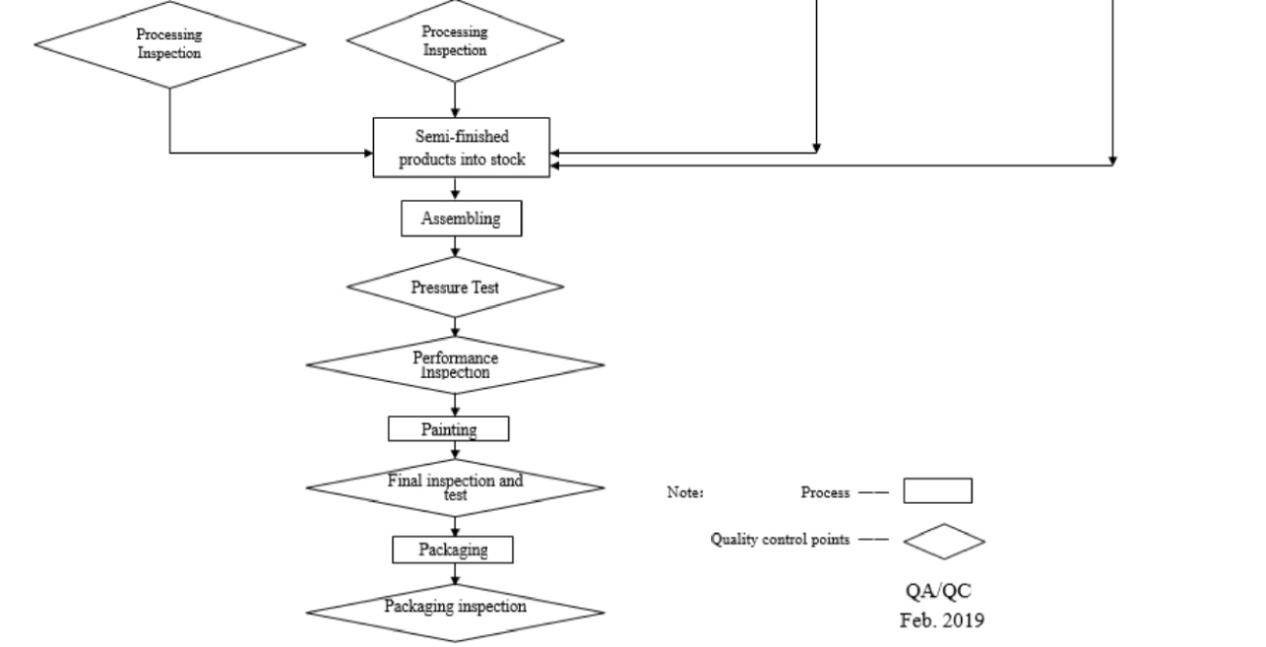
To understand performance variations between standardized and conventional gate valves, engineering teams must examine the sequential stages of valve manufacturing. The integration of formal ISO quality management frameworks establishes systematic quality control points throughout the production chain, contrasting with non-standardized commercial manufacturing practices.
A. Raw Material Inspection and Casting Quality Control
ISO-certified manufacturing begins with verified metallurgical chemical composition and structural foundry controls. Certified production processes utilize high-grade ductile iron, such as EN-GJS-450-10 or EN-GJS-500-7, verified through optical emission spectrometry before pouring. Spherical graphite structure and minimum tensile strength thresholds are checked for every heat batch to eliminate sub-surface gas porosity, micro-cracks, and internal voids.
In conventional manufacturing, raw materials often consist of unsegregated scrap iron melted without real-time spectral analysis. This reliance on visual furnace controls frequently results in brittle cast iron matrix structures with non-uniform graphite distribution. Such material variations increase vulnerability to hydraulic shock, pressure surges, and freeze-thaw thermal expansion in municipal piping lines.
B. Precision Machining and Dimensional Tolerances
Following foundry operations, raw castings undergo mechanical machining to establish sealing surfaces, bonnet mating flanges, and internal guide tracks. ISO-driven facilities deploy multi-axis CNC machining centers running standardized digital tooling paths. Critical dimensions, including stem thread geometry, flange facing concentricity, and wedge guide clearances, are held to precise tolerances within 50 micrometers.
Conventional production facilities rely heavily on manual lathes and non-automated mechanical fixtures. Cumulative tool wear, manual positioning variations, and uncalibrated measurement tools produce dimensional discrepancies across production batches. These variance issues lead to binding stem threads, uneven seating pressure, increased operating torque, and premature seal wear during actuation.
C. Surface Coating, Vulcanization, and Sealing Mechanics
Surface protection and seat vulcanization determine corrosion resistance and operational life in water distribution systems. ISO manufacturing mandates abrasive shot-blasting to achieve surface cleanliness before applying electrostatic Fusion-Bonded Epoxy (FBE) coating to an average thickness exceeding 250 micrometers in accordance with DIN 30677 standards. Gate wedges undergo high-pressure rubber vulcanization using certified EPDM or NBR compounds, ensuring permanent bonding without internal air voids.
Conventional coating procedures typically utilize standard air-dried spray paints applied over raw, unblasted metal faces. This results in inconsistent coating thickness, pinhole defects, and poor surface adhesion. Under continuous fluid exposure, sub-film corrosion develops quickly, causing coating delamination, rubber detachment from the internal wedge, and structural seat leakage.
D. Multi-Stage Pressure Testing and Flow Performance Verification
ISO quality control protocols require individual hydrostatic testing for every manufactured valve body before final clearance. Testing procedures defined by ISO 5208 and EN 12266-1 subject the valve shell to 1.5 times the nominal working pressure (PN10/16/25) and seat seals to 1.1 times nominal pressure. Zero allowable leakage (Rate A) must be maintained across high and low differential pressure conditions.
Conventional manufacturing lines frequently utilize statistical spot-checking or batch sampling, testing only one unit per fifty or one hundred produced valves. As a result, valves containing internal casting micro-porosity, stem seal imperfections, or misaligned seats bypass detection and are shipped to project job sites, increasing the risk of pipeline leakage during field installation.
E. Final Inspection, Certification, and Packaging Integrity
The final stage of ISO-compliant production includes systematic coordinate measuring machine (CMM) dimensional audits, coating thickness measurements, stem torque recording, and comprehensive trace documentation. Certified units are tagged with heat lot traceability numbers, accompanied by EN 10204 3.1 material test certificates, and packaged in sealed moisture-proof crates designed to resist impact damage during export transit.
Conventional exports rely on basic visual checks without comprehensive test documentation or material traceability. Inadequate wooden crate packing and lack of corrosion-inhibiting wrapping leave valve components exposed to marine ambient humidity, salt air exposure, and transport vibration during international transit.
Technical Case Analysis: Resilient Seated Gate Valve Engineering
To demonstrate the structural differences between certified manufacturing and conventional assembly, consider the design of a Resilient Seated Gate Valve. Designed specifically for water supply, wastewater handling, and municipal isolation, this valve configuration utilizes a straight-through full-bore architecture that eliminates bottom sediment traps and reduces fluid pressure loss.
The valve wedge is constructed from ductile iron and fully encapsulated in vulcanized EPDM rubber using high-temperature compression molding. The continuous rubber layer maintains zero-leakage sealing across fluid velocities up to 4 meters per second while resisting bi-directional flow pressures. A non-rising stainless steel stem paired with brass drive nuts delivers consistent lower opening torque across extended duty cycles. The internal and external surfaces are coated with non-toxic, drinking water-approved fusion-bonded epoxy powder, preventing corrosion and biogrowth attachment inside the pipeline cavity.
Technical Capability and Global Distribution Framework
Translating strict manufacturing standards into international pipeline supply chains requires comprehensive production infrastructure and localized technical support. Established valve developers and aftermarket service providers deliver flow control solutions designed for critical water treatment, municipal infrastructure, and industrial fluid applications worldwide.
Within China’s municipal water treatment sector, NST (formerly ZD) serves as a major manufacturer of flow control hardware, holding over 40% market share in municipal water butterfly valves. Based in Zhengzhou, Henan Province, the company operates dedicated production centers utilizing automated machining centers, modern elastomer vulcanization units, and full-spectrum testing laboratories.
To support international projects, a global distribution network with established sales organizations across the USA, Germany, Italy, the Middle East, Africa, and Central Asia provides technical field assistance, material compliance documentation, and local logistics management.
Specifications and Project CTA: Procurement Guidance for Municipal Infrastructure
When issuing tenders or selecting pipeline isolation equipment for municipal potable water systems, sewage mains, or industrial cooling circuits, engineering specifications must clearly outline material requirements to ensure long-term system reliability. Standard specifications typically cover nominal diameters from DN50-DN2000 with pressure ratings of PN10, PN16, PN25, PN40, or ANSI Class 125 and Class 150. Design compliance should align with EN 1171, BS 5163, DIN 3204 F4/F5, or AWWA C515/C509 standards, requiring ISO 5208 Rate A zero-leakage hydrostatic verification and DIN 30677, WRAS, or NSF 61 certified fusion-bonded epoxy coatings with a minimum thickness of 250 micrometers.
To specify resilient seated gate valves for upcoming pipeline expansion or retrofitting projects, engineering teams can consult technical documentation, CAD drawings, and certified test reports at https://www.nstvalves.com/.
NST
NST
Legal Disclaimer:
EIN Presswire provides this news content “as is” without warranty of any kind. We do not accept any responsibility or liability
for the accuracy, content, images, videos, licenses, completeness, legality, or reliability of the information contained in this
article. If you have any complaints or copyright issues related to this article, kindly contact the author above.

Media gallery